

Do you ever catch your reflection in a store window and wonder when you started slouching? That was me about a year ago. After 26 years leaning over patients as a dental hygienist, I had developed the classic desk-worker shape: rounded shoulders, a forward head, and a tight spot between my shoulder blades that showed up like clockwork by mid-afternoon. I tried posture apps that nagged me, a cheap drugstore brace that rolled up my back, and a standing desk I mostly used as a shelf. Then I ordered the Schiara posture corrector, mostly out of frustration, and I have worn it through four months of workdays, evenings in my recliner, and two-hour drives to visit my daughter in Cincinnati.
This review is the honest version of that experience. The Schiara will not fix your posture by itself, and I am not a doctor or a physical therapist, so if you have real back pain, check with one before you buy anything. But here is what the brace actually did for me over four months, what bugged me about it, and who I would tell to skip it entirely.
The Quick Verdict
The most comfortable posture reminder I have tried, and the only one I kept wearing past the first month. It will not strengthen anything on its own, but it turns 'sit up straight' from a nagging thought into a physical tug you cannot ignore.
Amazon Check Today's Price →The brace I kept reaching for, day after day
Four months in, this is the one I still reach for on work mornings. If you are tired of apps nagging you and braces that dig in, this is the one I would start with.
Amazon Check Today's Price on Amazon →How I've Used It
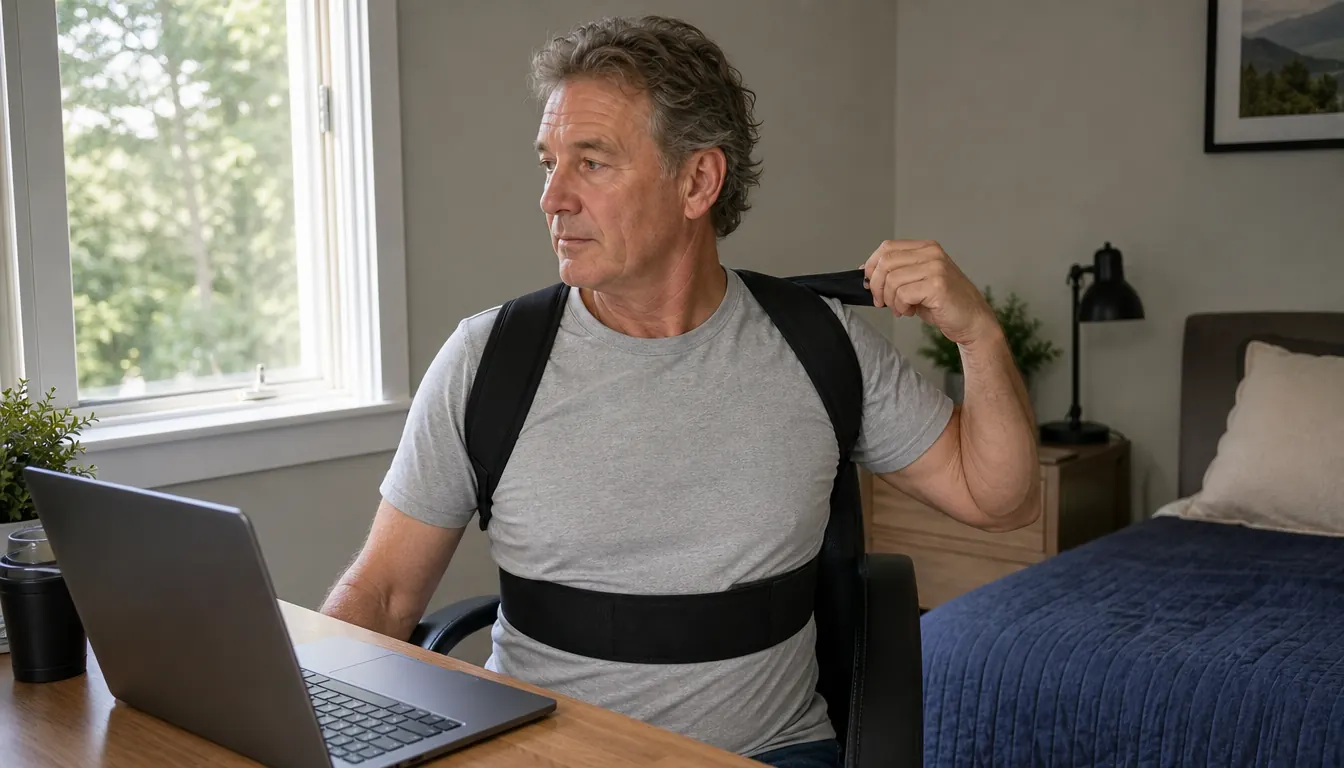
I wore the Schiara on most of the three days a week I work at a front desk, which means I sat, stood, filed, and answered phones in it. I also wore it at home in the evenings, sometimes for two or three hours while I paid bills on my laptop in the spare bedroom. On the days I drove to Cincinnati to see my daughter, I wore it for the whole round trip, about two hours each way in my 2016 Honda CR-V.
The way I used it matters, because a posture brace is only as good as your willingness to keep it on. I put it on over a thin t-shirt or under a blouse, tightened it until I felt a gentle pull rather than a squeeze, and took it off when I genuinely could not stand it anymore. Some days that was after four hours. Some days it was after ten.
I washed it once a week in cold water and hung it to dry. That part matters too, because a brace you cannot wash is a brace you will stop wearing by week two.
The recliner is where I am at my worst. Dave will tell you he has never seen anyone slouch so dramatically in a chair designed for comfort. I started wearing the brace in the evenings specifically because that is when my posture fell apart, after dinner, in front of the television. It helped there too, which surprised me, because I assumed a brace only worked when you were sitting up straight at a desk.
What the Schiara Actually Does
The Schiara is an adjustable upper back brace. It wraps around your torso, and the straps come over your shoulders, so when you slouch you feel a tug that pulls your shoulders back toward where they are supposed to be. It is not motorized and it is not smart. It is a simple system of adjustable straps that makes slouching slightly less comfortable than sitting up straight. That is the whole trick, and it works better than you would think.
The key word in that description is 'reminds.' The brace does not hold you in a perfect position. It reminds you, with a physical cue, every time you start to round forward. In the first week I caught myself correcting my posture maybe ten times an hour without thinking about it. That is the mechanism. It is not magic. It is a nudge, repeated hundreds of times a day.
What surprised me is how much the shoulder straps mattered compared to the cheap brace I tried first. That one just squeezed my waist and did nothing for my shoulders. The Schiara's straps are positioned so the pull lands across the upper back, where my slouch actually lives, without digging into my armpits or making it hard to breathe.
One thing I checked before buying was whether a brace like this can cause more harm than good. The short answer, from what I read and from my own experience, is that a soft, adjustable reminder like this one is low risk for a healthy person, as long as you do not crank it so tight that you cannot breathe deeply. I kept mine loose enough to fit two fingers under the strap, and I never had any numbness or pinching.
Where It Helped, and Where It Didn't
Here is the honest part. The Schiara did not give me perfect posture, and it did not cure the tight spot between my shoulder blades. What it did was reduce how often that tight spot showed up. Before, it was every single afternoon. After four months, it is maybe twice a week, and usually on days I did not wear the brace at all. That is a real change, and I think it happened because the brace trained me to catch myself slouching even when I was not wearing it.
The neck stiffness on long drives is a different story. I wore the brace for the whole two hours to Cincinnati and still got stiff. The brace helps your shoulders, but it cannot stop you from craning your neck toward the windshield. For drives, I had to adjust my seat and actually take a break halfway. The brace was a help, not a fix, and I think it is important to say that plainly.
One more thing I want to be clear about: a posture brace is not exercise. It does not strengthen your back muscles. If anything, treat it as a reminder while you do the actual work of strengthening. I added a few minutes of wall slides and rows at home, and I believe the combination is what made the difference, not the brace alone.
My daughter noticed before I did. On a visit to Cincinnati, she said I looked taller and asked if I had started doing yoga. I had not. I had just been wearing the brace for three months. That was the moment I stopped being skeptical about whether it was doing anything. I also noticed a difference in how I sat at the front desk. My lower back complained less by the end of a shift, which surprised me, because the brace is marketed for the upper back. I think it is because when your shoulders stop rounding forward, your lower back stops working overtime to compensate.
What Wearing It Every Day Is Actually Like
Comfort is where the Schiara wins. The cheap brace I tried first rolled up and left red marks. This one I genuinely forgot I was wearing, which is the highest compliment I can give a piece of gear. Under a blouse at the front desk, nobody could tell it was there. That matters if you are going to wear it to work, because a brace that shows under your clothes is a brace you will leave in the drawer.
The annoyances are real but small. The straps shift when I reach overhead, so I had to readjust after putting files on the top shelf. On hot days, any fabric against your back is going to be warm, and this was no exception. And for the first week, the gentle pull felt strange, like someone was constantly tapping my shoulder. My body got used to it. By week two, I barely noticed the tug unless I slouched.
Washing is simple: cold water, hang to dry. I did that every week, and after four months the straps still hold their tension and the fabric has not frayed. I cannot speak to how it holds up over years, but it has held up over months of regular use and regular washing, which is more than I can say for the drugstore brace.
One more thing about wearing it around other people. I was self-conscious the first time I wore it to the grocery store, but the truth is nobody noticed. It reads as a slightly odd undershirt at worst. The woman who works the desk next to mine only found out because I told her, and then she ordered one for herself.
Four months in, the mid-afternoon tight spot shows up twice a week instead of every single day. That is the whole story of this brace: it will not fix you, but it will remind you, over and over, until you start fixing yourself.

How It Compares to What Else I Tried
Before the Schiara, I tried the cheap drugstore brace, which squeezed my waist and did nothing for my shoulders, and I spent a week with the ComfyBrace, which is a solid brace but a different fit. The ComfyBrace is bulkier and reads as medical gear under a shirt. The Schiara is lighter and easier to wear all day, which is the whole point for me.
I also tried the non-brace options: a posture app that buzzed my phone, a lumbar roll for my desk chair, and a standing desk. The app worked for about a week until I started ignoring the buzzes. The lumbar roll helped my lower back but did nothing for my shoulders. The standing desk helped only when I remembered to use it, which was less often than I would like to admit.
The brace was the only thing that physically stopped me from slouching without me having to think about it. That is the comparison that matters, not brace versus brace, but brace versus everything else. For the effort required, the Schiara did more for my posture in four months than the app, the roll, and the standing desk combined.
How to Get the Most Out of It
Start slow. The first two days I wore the brace for an hour at a time, then added an hour each day. That gave my shoulders time to adjust without the muscles complaining the next morning. If you jump straight to eight hours, you will hate it, and you will quit.
Wear it during your worst posture hours, not your best. For me that meant evenings in the recliner and mid-afternoons at the desk, not the morning, when I was already standing tall. The brace does the most good in the moments when you would otherwise slouch without noticing.
Keep a simple log for the first month, just a line each night about how many hours you wore the brace and how your shoulders felt. That is the kind of thing a hygienist does, I suppose, but it helped me see the pattern. The days I wore it for at least six hours were the days my back felt best the next morning.
Do a little strengthening work alongside it. Ten minutes of wall slides, rows, or even holding a light resistance band in front of you and pulling it apart made the brace's reminders easier to follow. The brace points. The muscles do the work. Skip the exercise and you are just wearing a bandage over a habit that will come right back.
What I Liked
- Genuinely comfortable for all-day wear, even under work clothes
- Straps pull across the upper back, where the slouch actually happens
- Survived four months of weekly washing without losing tension
- Invisible under a blouse or light sweater
- Easy to put on and adjust by yourself
Where It Falls Short
- Will not strengthen your back on its own; you still need real exercise
- Straps shift when you reach overhead and need readjusting
- Warm on hot days, like any fabric against your back
- Does little for neck stiffness on long drives
- Took me about a week to get used to the constant gentle tug
Who This Is For
Buy the Schiara if you are like me: you know your posture is bad, you have tried reminding yourself to sit up straight and it does not stick, and you want something that gives you a physical nudge every time you slouch. It is ideal for desk workers, for people who spend hours in a car, and for anyone who wants to wear a brace under normal clothes without looking like they are recovering from surgery. If you are willing to wear it consistently for a few weeks, and to add a little strengthening work on the side, I think you will see the same slow improvement I did.
Who Should Skip It
Skip it if you are looking for a fix that requires no effort, because this is a reminder, not a cure. Skip it if you have a diagnosed back or shoulder condition, because you need a physical therapist or a doctor, not a brace from Amazon. And skip it if you know you will not wear it. I have seen too many posture braces end up in the back of a closet after a week. If you are not ready to put it on every morning for a month, save your money and start with a simple exercise routine instead.
Four months later, I am still wearing it
That is the test that matters for a posture brace. If you want to try the Schiara for yourself, check the current price on Amazon and follow the sizing guide before you order.
Amazon Check Today's Price on Amazon →