

I bought the ChiFit Back Stretcher in February, after a winter of coming home from work with my shoulders somewhere around my ears. I am 54 years old. I spent 26 years leaning over patients as a dental hygienist, and by mid-afternoon I can feel a tight spot between my shoulder blades that no amount of floor stretching seems to touch. My husband Dave, a retired mail carrier, has his own lower-back complaints, so when the ChiFit showed up, I think we were both hoping it would fix something. Six weeks later, I have opinions, and some of them are not what I expected.
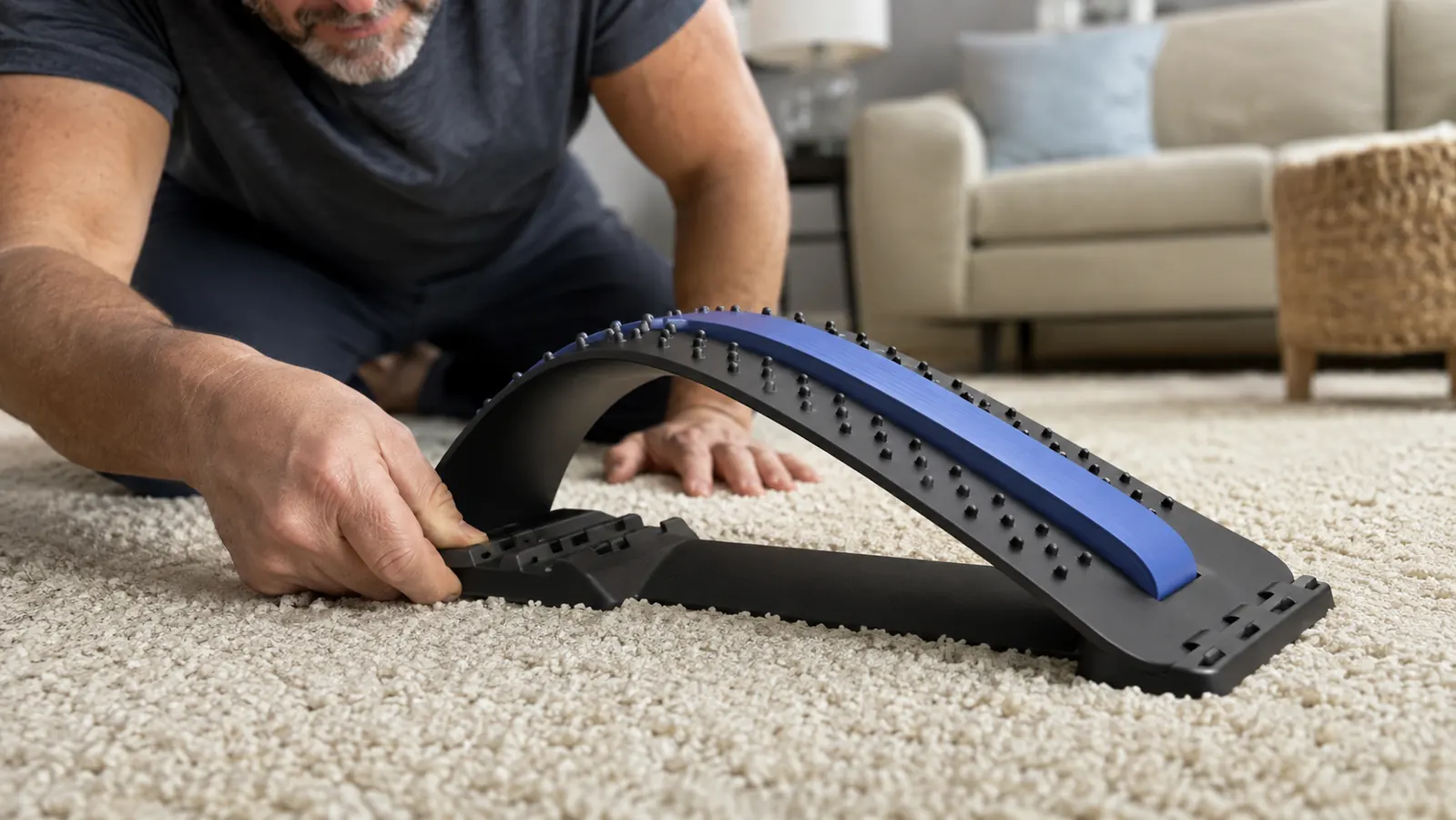
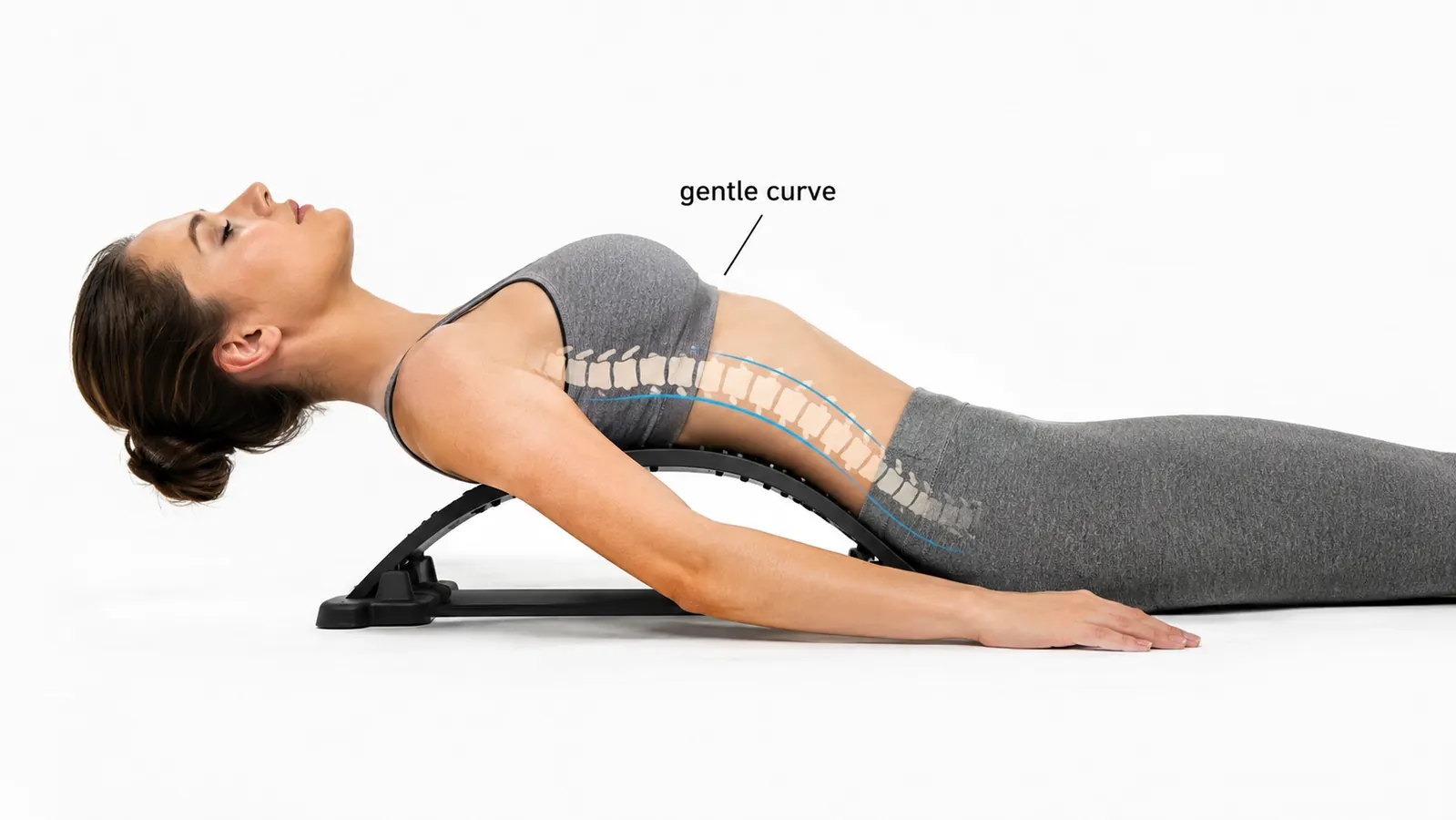
Here is the honest version, the one I wish someone had given me before I ordered it. The ChiFit is a curved plastic frame you lie back over. It works by letting your spine settle into a gentle arch, which is the opposite of the hunched position most of us sit in all day. It is not a massage device. It is not a heating pad. It will not fix a herniated disc, and it will not cure sciatica. What it can do, for some people, is take the edge off a stiff back in a few minutes a day. Whether it does that for you depends on how you use it, how patient you are, and whether your body tolerates the position. I want to walk you through all of it, including the parts that almost made me send it back.
The Quick Verdict
A simple, well-built back stretcher that helps with mild stiffness and posture fatigue, but the learning curve is real, the first few sessions are uncomfortable, and it is not the instant fix the listing suggests.
Amazon Check Today's Price →The back stretcher I kept using after 6 weeks
I tested the ChiFit for 42 days, kept it through the uncomfortable first week, and it is now part of my evening routine. If you are tired of a stiff back by 4 PM and want something simple to try at home, this is the one I would buy again. Check the current price on Amazon before you decide.
Amazon Check Today's Price on Amazon →How I've Used It
For the first five days, I used it exactly as the instructions said: two minutes in the morning, two minutes at night, starting on the lowest arch setting. I will be straight with you, those first sessions were not pleasant. The device forces your lower back into a curve it has not seen in years, and my muscles spent the first week fighting it. I felt it most in my lower back and along the sides of my ribcage. By day six, I could relax into it. By week two, I stopped dreading it.
My routine now is about five minutes after dinner while I watch the news. I start on the middle arch, lie back slowly, and let my arms rest over my head or across my chest. I breathe, I try to soften my shoulders, and I stop the second anything pinches. Most nights I also use it after a long drive to my daughter's place in Cincinnati, about two hours each way in my 2016 Honda CR-V. That is where I notice the biggest difference. My neck and upper back feel less locked up when I arrive, and I do not arrive already dreading the visit the way I used to.
One thing I want to be clear about: this is not a passive experience. You cannot just lie on it and expect the work to happen. I get the most relief when I actively press my lower back into the curve and let my head rest heavy on the floor. When I do that, the tight spot between my shoulder blades eases up noticeably. When I just lie there, I mostly feel the plastic pressing into my back. The device is a tool, not a treatment. You are the one doing the stretching.
I also learned that consistency matters more than duration. A two-minute session every day helped me more than a ten-minute session once a week. I kept a little notebook next to the recliner for the first month, mostly to remind myself to actually use it. That sounds silly, but it worked. By the time I stopped keeping the notebook, the habit had stuck.
What Nobody Tells You Before You Buy
The listing makes it look like you lie down, relax, and walk away transformed. Nobody tells you that it takes a week to get used to, that you will likely feel sore in new places at first, and that the instructions are a single sheet of paper with cartoon drawings. Nobody tells you that the curve is aggressive even on the lowest setting if your back is genuinely tight. And nobody tells you that you have to be the kind of person who will actually use it, because a back stretcher that sits in the closet is worth exactly nothing.
The first five days were genuinely uncomfortable. I almost returned it. By week two it was the first thing I reached for after a long day.
The other thing I did not expect is how much the floor matters. The ChiFit works best on a firm surface with a yoga mat or a folded blanket under you. On plush carpet, I sank in and the arch felt wrong. On a hard floor without padding, my tailbone complained. My solution is a cheap exercise mat I already owned, and that made a bigger difference than I expected. If I had known that on day one, I would have had a much better first week.
There is also a mental hurdle nobody mentions. Lying on a curved piece of plastic looks and feels a little ridiculous at first. My husband walked in on me the second night and asked if I was okay. You have to get past the self-consciousness, especially if you live with someone. After a week, it just becomes part of the evening, but that first week is a test of will.
Build Quality and Materials
The ChiFit is made of a rigid plastic with a textured foam pad on the contact surfaces. It feels sturdy, not flimsy. The arch has several height settings, and the adjustment mechanism clicks into place and holds. In six weeks of daily use, I have not seen any cracking, warping, or wear on the pad. Dave is bigger than I am, somewhere around 200 pounds, and he has used it too without any concern about it flexing or bending under him.
That said, it is a hunk of plastic. It is not pretty, it does not fold flat for storage, and it takes up a corner of the living room. I keep mine behind the recliner, and I have tripped over it twice. If you have a small apartment or no place to stash it, that is a real consideration. This is a device you will see every day, whether you use it or not.
The foam pad is fine but thin. After ten minutes, my lower back starts to feel the hard plastic underneath. I have not found this to be a problem at my usual five-minute sessions, but if you plan to lie on it longer, I would put a towel over the pad. The ChiFit is well made for what it is, but what it is, is a simple piece of curved plastic. It is priced accordingly, and you should not expect the build quality of a piece of medical equipment.
The Results After Six Weeks
I want to be careful here, because I do not want to overstate what happened. My back is not transformed. I do not wake up pain-free. But I have noticed three concrete changes. First, the tight spot between my shoulder blades shows up later in the day, usually after 4 PM instead of right after lunch. Second, my posture is better when I remember to use the ChiFit regularly, because the device reminds my body what a neutral spine feels like. Third, long drives bother me less. I made the trip to Cincinnati three times during the test, and the last two were noticeably more comfortable.
Dave's experience is different from mine. He has a specific lower-back complaint from decades of carrying mail, and he says the ChiFit does not do much for him. He uses it occasionally, but he does not reach for it the way I do. That matches what I have read from other reviewers: this device seems to help people with general stiffness and posture fatigue more than people with a specific diagnosed issue. If you have real back pain, a herniated disc, or sciatica, please talk to a doctor or physical therapist before you spend money on a curved piece of plastic. I am not one, and I am not going to pretend this is medical advice.
I also want to be honest about what it did not do. It did not fix my rounded shoulders. It did not make me taller, and it did not make my neck pain disappear. What it did was give me a few minutes a day where my spine was in a better position than it is in for the other twenty-three hours. That alone has been worth it to me, but I would not want anyone to buy it expecting a structural change. It is a stretch, not a correction.
Alternatives I Considered
I looked at a few other back stretchers before I settled on the ChiFit. There are cheaper ones with a single fixed curve, and there are more expensive ones with vibration or heat built in. I chose the ChiFit because it had multiple arch settings and because it had thousands of reviews, which felt like a safer bet than a no-name device. I also considered a foam roller, which I already own, but the roller is harder to use for the upper back and it rolls away unless you brace it against a wall.
In hindsight, I think the ChiFit is a reasonable middle ground. The cheaper single-curve stretchers are fine if you only need one position, but I like being able to progress as my back loosens up. The heated and vibrating options sound nice, but they cost more and add parts that can break. For my money, the simple version was the right call. That said, if your back pain is severe or persistent, none of these devices replace a real evaluation by a professional. I would start there.
What Other Reviewers Complain About
I read a lot of the 6,300-plus reviews before I bought the ChiFit, and again after I had used it for a few weeks. The most common complaints are the ones I ended up having myself: it hurts at first, it does not work for everyone, and the instructions are thin. Some reviewers say the device is too aggressive even on the lowest setting. Others say it does nothing for them. A fair number of negative reviews seem to come from people who expected a massage or a passive cure, which is not what this is.
The positive reviews, and there are many, tend to sound like me after week two. People describe using it daily for a few minutes and feeling less stiff, especially in the lower back. Some reviewers with desk jobs say it helps their posture. A few mention using it after long drives. The pattern that stands out to me is that the people who love it use it regularly, and the people who hate it mostly tried it once or twice. That matches my experience exactly. If you read the negative reviews first, you will think it is a waste of money. If you read the positive ones, you will think it is the best thing since sliced bread. The truth is in between, and it depends on what you need it for.
What I Liked
- Simple to use once you get the hang of it
- Solid build, no flexing or cracking after six weeks
- Multiple arch settings let you progress slowly
- Noticeably helps posture fatigue and stiffness from desk work and driving
- Light enough to move around the house
- One-time purchase, nothing to recharge or replace
Where It Falls Short
- Uncomfortable for the first week, and the listing does not warn you
- Needs a firm surface and a mat, which they do not tell you
- Bulky, does not fold, and lives in the way
- Thin foam pad gets uncomfortable on longer sessions
- Does little for specific lower-back issues like Dave's
- Instructions are minimal and easy to outgrow
Who This Is For
The ChiFit is for someone like me: generally stiff, desk-bound, with rounded shoulders and a tight upper back by the end of the day. It is for people who want a few minutes of gentle traction at home and are willing to push through an awkward first week. It is for people who already know they feel better after stretching and want something that makes the stretch easier to do consistently. If you are that person, I think the ChiFit is a reasonable buy at its current price.
It is also for people who travel by car a lot, or who sit for a living. I have a small spare-bedroom desk where I pay bills and write, and I spend more time than I like hunched over a laptop. A few minutes on the ChiFit at the end of the day undoes some of that. If you work in an office or spend long hours driving, you might get more out of it than I do.
Who Should Skip It
Skip it if you have a diagnosed spine condition, acute back pain, or any history of injury you have not cleared with a professional. Skip it if you are looking for a passive fix, because you have to be an active participant. Skip it if you have nowhere to store a bulky curved piece of plastic. And skip it if you are not going to use it daily, because occasional use did not do much for me. If any of those sound like you, save your money and talk to a physical therapist instead.
I would also tell you to skip it if you are buying it for someone else as a gift. This is a very personal thing, and the person has to want to use it. My daughter visited for a weekend and tried it once. She said it felt nice for about a minute and then she was done. That is not a criticism of the device. It is just a reminder that a back stretcher only works if the person using it is willing to lie on it for a few minutes a day, and that is not everyone.
My honest bottom line
I kept the ChiFit, I use it most nights, and it helps with the kind of back stiffness I have. It is not a cure and it is not for everyone, but for a simple home stretching tool it does what it claims. See what it costs today on Amazon and decide for yourself.
Amazon Check Today's Price on Amazon →