
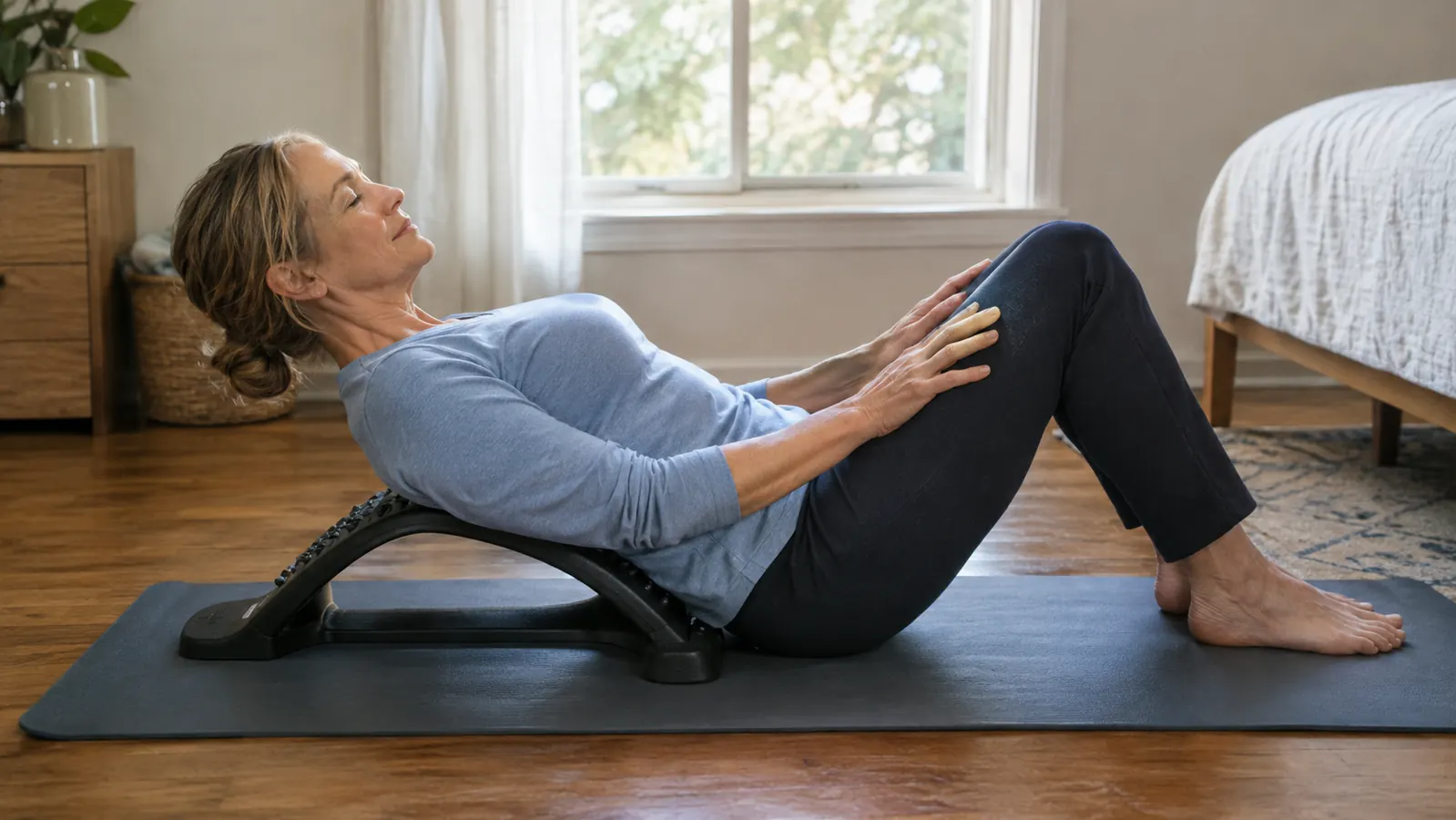
I spent 26 years as a dental hygienist, leaning over patients with my shoulders rolled forward and my chin reaching toward the light. My back has the posture to prove it. Rounded shoulders, a head that drifts ahead of my spine, and a tight spot between my shoulder blades that shows up by mid-afternoon no matter how I start the day. I have tried the stretching routine, the foam roller, the massage appointments, and the sincere promise to sit up straight, which never survives lunch. Somewhere in there I ordered the ChiFit Multi-Level Back Stretching Device, mostly because it was cheaper than another massage and I could use it while watching television.
This is not a review written after one evening on a new gadget. I have used the ChiFit most days for about five months, long enough to know which level actually helps, which claims are just marketing, and whether it earned a permanent spot in my spare bedroom. The short version: it is the one piece of back gear I kept. The longer version follows, including the parts that annoyed me, because a review that only praises is not a review. I ordered it on a Tuesday night after a shift that left my shoulders in knots, and then I let it sit in the box for a week before I tried it, because I had been disappointed by posture gear before.
The Quick Verdict
A sturdy, adjustable back stretcher that genuinely helps with mid-back and upper-back stiffness when you use it daily. It will not fix a herniated disc or replace a doctor, and the listing oversells 'immediate relief.' For a tight, desk-weary back like mine, it does what it promises.
Amazon Check Today's Price →Five months in, this is the back stretcher I would buy again
The ChiFit is a simple tool that does one thing well: it gives your spine a gentle, adjustable stretch while you sit still for a few minutes. See today's price on Amazon and read what other owners report before you decide.
Amazon Check Today's Price on Amazon →How I've Used It
My routine is boring on purpose. Most mornings I pour a mug of coffee, sit on the mat in my spare bedroom, and start on the lowest level for about three minutes. The first few sessions, even the lowest level felt like a lot. Your back bends over the frame in a way you do not expect, and if you have been hunched for decades, that position is unfamiliar. I kept the sessions short and stopped the moment it felt like too much.
After about two weeks I moved up one level, and after a month I settled on the middle setting for my daily stretch. On days when my neck is stiff after a long drive, I do a second session in the evening while Dave watches the news. Dave is my husband, a retired mail carrier with his own lower-back complaints from thirty years of carrying a satchel. He uses the ChiFit maybe twice a week, always on the lowest level, and he has become more of a believer than I am.
I also use it on the floor in front of the recliner I admit I slouch in at night. Five minutes there, with my knees bent and my arms crossed over my chest, is the version that seems to do the most for the spot between my shoulder blades. The key for me was making it part of an existing habit instead of a new project. I do not schedule stretching. I just sit on the mat the way other people sit on the couch.
What the ChiFit Actually Does
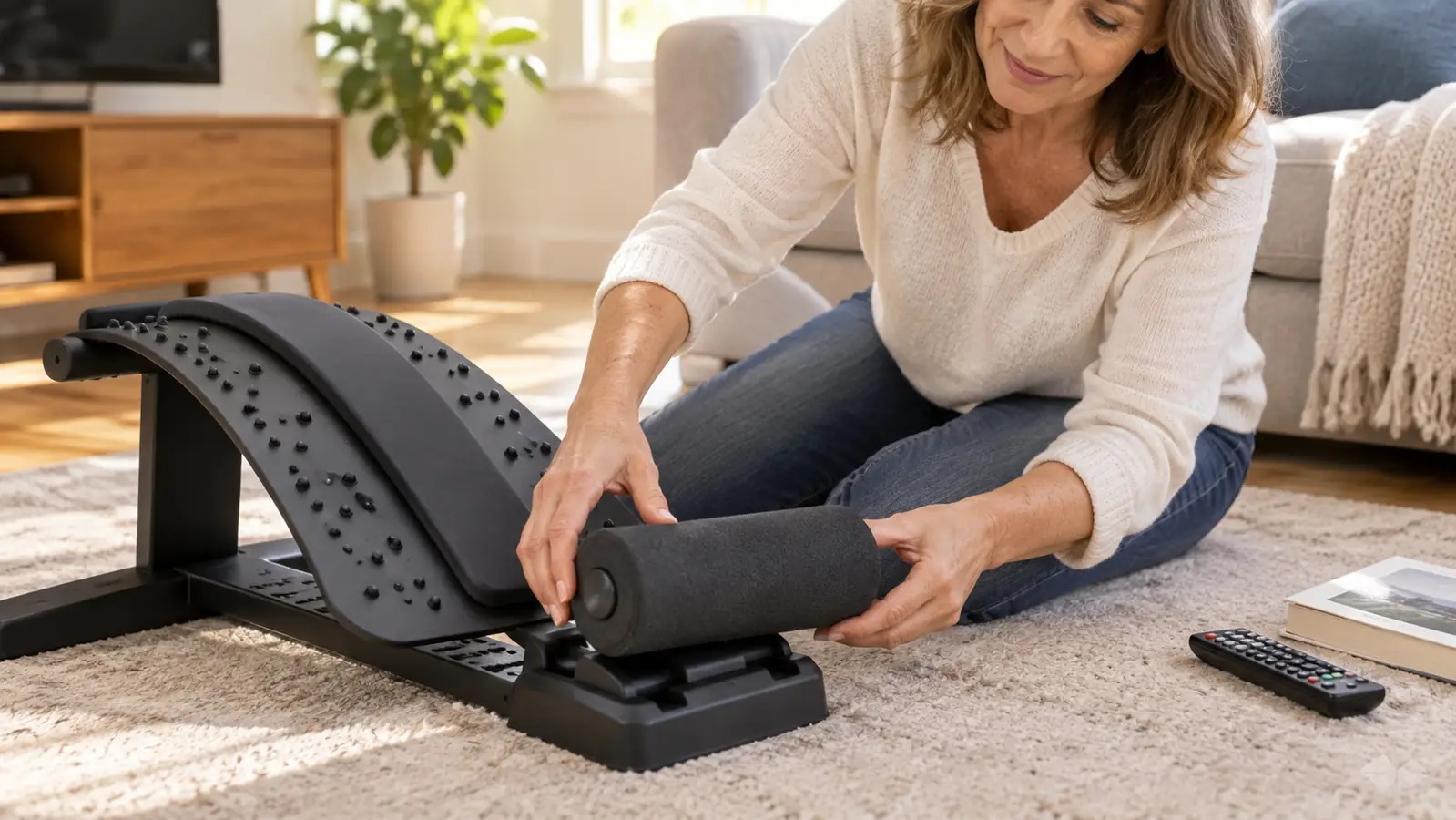
The ChiFit is a padded frame that you lie back over. The idea is simple: instead of stretching your back with your own muscles, you let the frame hold you in a gentle backward bend. The multi-level part means the frame has several height settings, so you can start with a mild curve and work up to a deeper stretch as your back loosens up. There is nothing complicated about it, and that is the point.
For me, the useful part is the upper and middle back. When I lean back over the frame, my shoulders finally roll back on their own. I do not have to think about posture, which matters, because thinking about posture has never worked for me. The stretch also opens the front of my chest, which is the tight side after years of reaching forward over patients. I feel the effect most in the muscles between my shoulder blades, the exact spot that bothers me by mid-afternoon.
I want to be careful about what this device is not. The listing name mentions herniated discs, sciatica, and scoliosis, and I think that is a lot to put on a piece of foam and plastic. I am not a doctor or a physical therapist, and I would never tell anyone with those conditions to treat this as medical care. For ordinary tightness from sitting and leaning, it is a straightforward tool. For real pain, talk to someone qualified first.
How It Held Up Over Months of Use
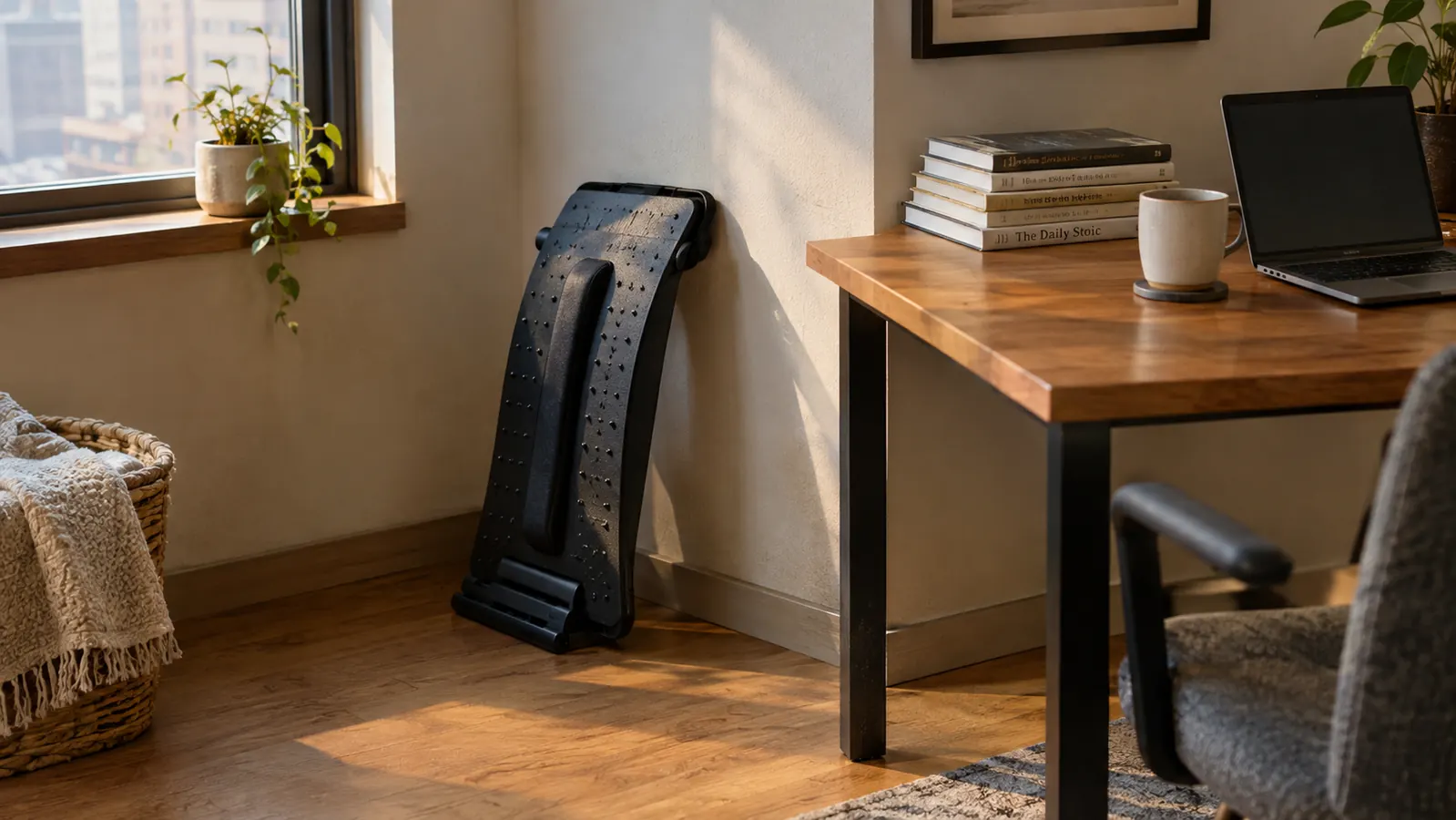
Five months of daily use is a fair test of any piece of gear. The frame itself is solid. Nothing has cracked, the padding has not flattened, and the pad has never shifted while I was lying on it. The whole thing weighs almost nothing and leans against the wall beside my desk when I am not using it. After this long, I have no worry about it falling apart.
What annoyed me: the base slides on hardwood. On carpet it stays put, but on our bedroom floor I have to set it against a baseboard or put a yoga mat under it. That is a small thing, but it is the kind of small thing that decides whether you actually use a tool every day. I also wish the pad were removable for washing, since it is the only part that touches you. It wipes clean easily enough, so this is a wish, not a dealbreaker.
The thing that held up best is the one I did not expect: I still want to use it. Most of my posture gear ended up in a closet by week three. The ChiFit stayed out because it is easy, because it does not require changing clothes or clearing a schedule, and because the stretch genuinely feels good by the time you stand up. That matters more than any spec on the box.
The days I use the ChiFit, the tight spot between my shoulder blades waits until after dinner. The days I skip it, it is back by mid-afternoon.
Where It Falls Short
The listing promises 'immediate relief,' and I think that sets the wrong expectation. The first few times I used it, I felt the stretch during the session and then went right back to my old posture the moment I stood up. The benefit built slowly. After a few weeks, I noticed the tight spot arriving later in the day, and after a month it was showing up only in the evening on days I stretched. That is not magic. That is a daily habit doing its job.
It also does very little for my lower back. Dave likes it for his lower back, so this is personal, not universal, but it is worth knowing before you buy. And it will not fix your posture by itself. If you use it for five minutes and then sit hunched for nine hours, you will feel about the same. I pair mine with a standing break at work, and that combination is what actually moved the needle for me.
There is also a limit to how much a passive stretch can do. The ChiFit holds you in a good position, but it does not build the strength to hold that position on your own. The days I also do a few wall pushaways or just stand up and roll my shoulders at work are the days I notice the most difference. The device is a helper, not a substitute for moving your body.
Alternatives I Considered
Before I settled on the ChiFit, I tried the classic wooden back stretcher with the acupressure nubs. It was fine, but the nubs were too aggressive for me and the surface was hard. I also looked at a plastic stretcher from another brand and a lumbar roll for my desk chair. The roll helped when I remembered to use it, which was rarely, and the plastic stretcher did not offer the same range of levels.
The ChiFit won because of the adjustable levels and the padding. I could start gentle and progress at my own pace, which mattered more than I expected. I also compared it with a massage gun, but that was a different job. The gun works on the muscle. The stretcher works on the position. I kept the stretcher, and I still use the gun on the days when the muscle itself is the problem.
What I Liked
- Adjustable levels let you start gentle and progress at your own pace
- Padding is comfortable enough for daily use
- Light enough to move between rooms and store against a wall
- Easy to use while watching television, so it actually becomes a habit
- Held up well over five months of daily use
- Works for my upper-back tightness and my husband's lower-back complaints in one house
Where It Falls Short
- Base slides on hardwood floors without a mat underneath
- Listing oversells 'immediate relief' and mentions serious conditions it cannot treat
- Did almost nothing for my lower back, though it helped Dave's
- Pad is not removable for washing
- Only works if you use it consistently, like any stretching tool
What I'd Tell a Friend Who Just Bought One
If you buy one, start on the lowest level and keep the first sessions to two or three minutes. The stretch is stronger than it looks, and your back needs time to get used to being in that position. I made the mistake of jumping to the middle level on day two and spent the next morning feeling like I had done something foolish. Slow and short is the way in.
Use it on a carpeted floor or put a mat under it, at least until you know how it behaves on your floors. And do not judge it by the first week. I almost wrote the ChiFit off after seven days because I did not feel dramatically different. The change came in week three and week four, when the stretch started to feel comfortable instead of intense and the effects started to last past the session.
I would also tell a friend to ignore the parts of the listing that promise to address serious conditions. A device like this is for maintenance, not treatment. If it were me sitting across the kitchen table, I would say: buy it if your back is tight and you want a simple daily stretch, use it consistently, and see a professional if you are actually hurting. That is the whole honest pitch.
One thing I did not expect: the ChiFit became part of my drive to Cincinnati. I visit my daughter about once a month, a two-hour trip each way in my 2016 Honda CR-V, and my neck is always stiff by the time I arrive. Now I stretch on it the evening before I leave and again the morning after I get home. It does not undo the drive, but it takes the edge off the worst of it.
Who This Is For
This is for people whose backs are tight from the same things mine is: decades of leaning forward, long days in a chair, and the slow creep of rounded shoulders. If you want a low-effort daily stretch you can do while watching television, and you are willing to give it a few weeks instead of expecting one session to fix you, the ChiFit is a good fit. It is also for people who have tried the foam roller and the yoga class and want something simple that stays in the house and actually gets used.
It is also a reasonable buy for someone who travels or works from home and wants a stretch they can do without leaving the house. I keep mine in the spare bedroom where my laptop lives, so it is within reach during the day. When the mid-afternoon tightness shows up, I can take a three-minute break and lie on it, then go back to the desk. That convenience is the real reason it worked for me.
Who Should Skip It
Skip it if you have a diagnosed spine condition and have not talked to a doctor or physical therapist first. Skip it if you want a product that fixes your posture while you do nothing else, because that product does not exist. And skip it if you are specifically looking for deep lower-back relief, because whether it helps there seems to depend on the person. Dave swears by it for his lower back. It did almost nothing for mine. If your pain is real and persistent, spend the money on a professional instead of a piece of equipment. And if you already have a stretching practice you actually enjoy, you do not need this. It is a tool for people who need easy, not another thing on the list.
The back stretcher that earned a permanent spot in my spare bedroom
Five months of daily use, one honest verdict: the ChiFit is a simple, sturdy tool that helps if you actually use it. Check today's price on Amazon and see whether it fits your routine.
Amazon Check Today's Price on Amazon →